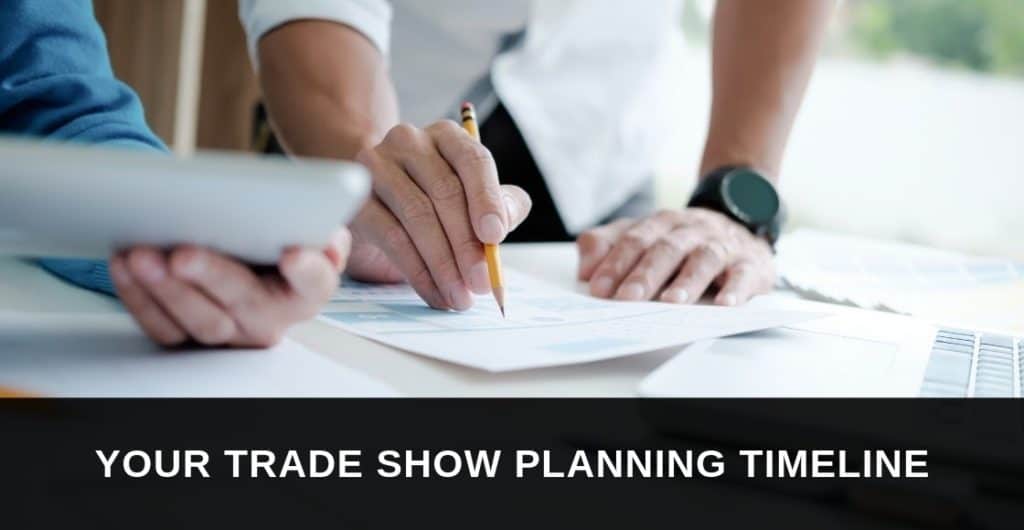
Trade show planning doesn’t have to be daunting. Whether you’re a first time exhibitor or an old pro, success all comes down to one thing: preparation. It’s important to start early and have a clear outline of the tasks needed to get your brand show-ready. That’s why we’ve broken down the planning process into three different phases. So let’s get started – here’s your trade show planning timeline:
Trade Show Planning Timeline – Phase 1 (12 Months Before)
If it’s your first time exhibiting at a trade show, you might be surprised to learn that planning should start at least a year out. Registering early for your trade show booth space is the best way to secure a prime spot on the trade show floor. It also gives you enough lead time to design and fabricate a custom trade show exhibit. But first, start by outlining your brand’s strategic goals. Is it lead generation or increased brand awareness? After you define your focus, set your budget and target return-on-investment (ROI). By setting your goals and budget at the onset, you can use them to make informed decisions throughout the trade show planning process.

Phase 2 (6 Months Before)
At this point in your trade show planning timeline, your planning starts picking up. If you’re working with a full-service exhibit agency, they’ll take care of handling your exhibit logistics, from shipping, installing, dismantling, and even on-site management. If not, you’ll need to coordinating with vendors for those services as well as check in on the progress of your exhibit designer/builder. If doing it on your own, it’s also time to start designing your trade show booth graphics and any marketing materials for your team to hand out at the show. Additionally, start making sure your team and new products will be ready to go.

Phase 3 (3 Months Before)
Your trade show is coming up! With a few months to go, check in on your orders to ensure they’ll be ready and delivered in time for the show. Then get your team ready, which involves more than training. Make the most of your team’s time at the show by contacting attendees and planning meetings in advance. Setting breakfast, lunch or dinner meetings can be a great way to fit more in. At the same time, increase your trade show ROI and booth traffic with pre-show marketing like press releases and email campaigns.

If you follow this trade show planning timeline, you’ll be more than ready for the big day. Go more in-depth with pre-show planning, or check out our top creative ideas for your exhibit.
Our custom exhibit fabrication team does a tremendous job. We are constantly challenged and our team rises to the occasion every time. Recently, we were approached by a design firm with a concept that several other exhibit houses claimed would not be possible to build as shown in their design.
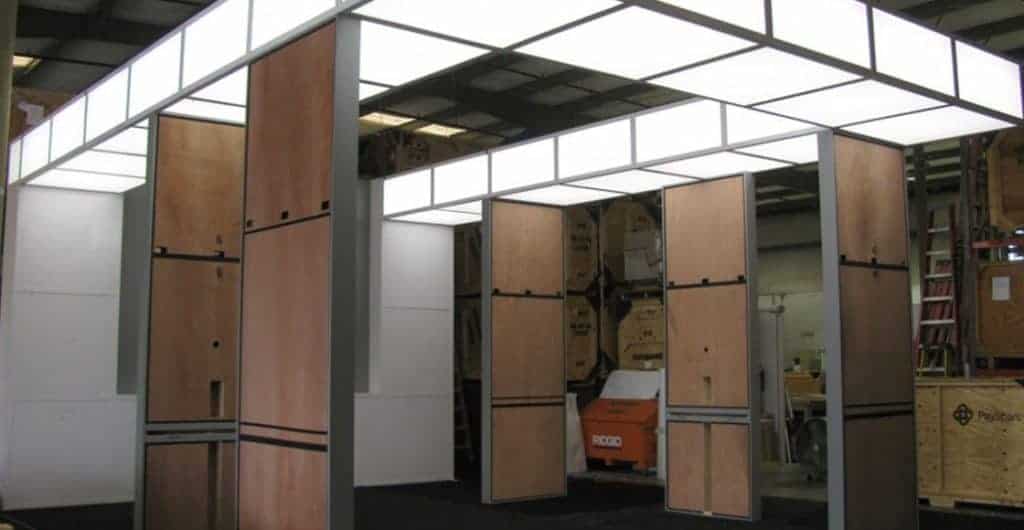
The design is striking, but the engineering concerns were real. Every inch of the structure would be custom fabrication including one very prominent feature; an enormous backlit header running the entire perimeter of the exhibit. A portion of this structural focal point would also have to cantilever out past the vertical supports….very tricky!
Competing companies on the project indicated that it would not be possible to achieve this effect without significant cost, weight and additional safety rigging. Our team took a close look at the concept and said, “We can build that, just like it is in your design concept”.
We are blessed with a fabrication team that has a very diverse skill set. One of those many skills includes welding. These came in very handy when considering the best way to achieve the look required by the exhibit design, and yet still maintain strength with a manageable weight.
The solution was a custom light box structure manufactured primarily out of Aluminum. The final result is extremely light and rigid. Each section of the light box fits together seamlessly and traps all of the light, reflecting it downward for a perfectly even and consistent bright glow. Let there be light!
Stay tuned for more details on this exhibit being built for one of our newest clients. We can’t tell you who it is yet, the exhibit discussed here debuts next week. Needless to say, we are anticipating quite a reaction. Heck, this might even be another “Best of Show” design award!!


Don’t let the idea of exhibiting at a trade show overwhelm you. It’s a great way for your business to build brand awareness, demo new products, create industry connections, and gain new customers. The key is making the most of your time at the event. To make things easier, we’ve split our top trade show marketing tips into do’s and don’ts for exhibitors. Here’s a list to help you achieve your trade show goals:
Do’s for Trade Show Marketing
1. Define your trade show marketing strategy and goals
When it comes to trade show marketing, you should always start by defining your goals. What objectives will you use to define success? There will be a number of ways to track your return-on-investment. For example, the number of leads or number of face-to-face meetings in the booth? You should decide what strategic brand objectives you want to focus on at the trade show or convention.
2. Outline your trade show marketing budget
Once you have your goals set, you can use them as a guiding force to create your trade show marketing budget. If you’re not sure how to begin, we’ve put together a whole post on trade show budgeting you can check out. It goes over a typical cost breakdown and a simple way to calculate a ballpark budget for your trade show display.
3. Design a custom trade show display
We know it may be tempting to choose a cheaper, generic trade show display. However, many businesses achieve a higher ROI with a custom exhibit. After all, you’re investing a lot of time and resources when your business attends a trade show. How you can make the most of it depends on your unique business and brand objectives. You can use this post to help you decide if going custom is right for your business.
4. Consider custom exhibit rentals as an option
It may surprise new exhibitors, but not all exhibit rentals are generic. Some exhibit companies offer highly custom trade show exhibit rentals. If you’re not sure which option is right for your business, look for full-service exhibit agencies that can discuss your business needs and help you choose the right exhibit size, type, and design for your brand.
5. Think about traffic flow when designing your exhibit
You don’t want a bottleneck of customers trying to interact with your trade show sales team. During the exhibit design process, talk to your designer or team about how to make the most of your space. Depending on the size of your booth, you can consider designating separate areas for customers to lounge or test your product.
6. Designate a private area for client meetings
Arguably the best aspect of trade show marketing is the opportunity for face-to-face meetings with prospects and clients. Having a semi-enclosed space in your exhibit is one of our favorite trade show trends. It can help your sales team capture potential customer’s attention away from the busy show floor.

Don’ts for Trade Show Marketing
1. Don’t trust your trade show display to just anyone
When it comes to investing in your trade show display, we recommend partnering with a full-service exhibit agency. Full-service exhibit companies like us can take care of every step of the process, from design and fabrication and installation. You’ll save a lot of time, stress, and money by not having to coordinate it all with different companies. You’ll also ensure you get the highest quality result. That leads us to our next don’t –
2. Don’t forget to include these expenses in your budget..
If you’re not working with a full-service exhibit firm, you may not be familiar with all the different steps of a trade show display. Don’t make the mistake of forgetting to budget for shipping, installation, dismantling, and storage costs. These are all unavoidable components of exhibiting, so you’ll want to plan for it upfront in your trade show marketing budget.
3. Don’t overcrowd your exhibit with every product
It’s important to be strategic. Not only do you want to maintain the flow in your booth, you also want to give your team the best chance to generate sales. It can be hard when there’s too many products for booth visitors to choose from. It’s a good idea to showcase only your best or newest products that you think will connect with that trade show’s audience. Not only will it allow you to design a cleaner aesthetic for your booth, it will improve your success at the show.
4. Don’t wait to order your marketing materials
Don’t wait until the last minute! Brochures, flyers, branded swag and any marketing collateral your team will need can take time to design, print, and ship. Save on stress by ordering everything a few months before the show. We’ve put together an easy-to-follow trade show planning timeline you can use as a guide.
5. Don’t assume prospects will come to you
With trade show marketing, you might assume you can simply show up to a convention or expo with a great exhibit and team and be done. However, in order to truly make the most of your investment and time at the show, you should always do pre-show marketing. This can include social media posts, email campaigns, and calling prospects that will be attending and setting up appointments ahead of time.
6. Don’t stop marketing when the trade show ends!
That’s right. Post-show marketing is another important way to make the most of any trade show, convention, or expo. Now that you’ve attended, had fun, met new business contacts, and left with a ton of sales leads, don’t stop there! Ensure your sales team has a plan in place for following up so you can turn those great leads into customers.